Regulatory Strategy Consulting (Medical Device)
Your key to success is having a robust regulatory strategy aligned with your business strategy. As you identify the key markets you want to expand into, we can work closely with you to craft your regulatory approach and structure your business activities, to meet your targets.
Our Regulatory Services

Identifying the risk classification of your medical device and applicable regulatory requirements.

Advising on the best route for product registration, together with preparation of required documents for submission.
As product registration timelines vary based on countries and products, please contact us for more information about expected timelines for registration.
Product Registration License Holder
A good regulatory strategy should evolve according to changes in market needs and regulatory landscape.
Asean Countries
Across ASEAN, Stendard can help you achieve marketing authorisation of your devices – development of regulatory strategy (such as determining the risk classification of your device and the route to market), implementation of your QMS, preparation of the Technical Dossier, and submission of the application to regulatory authorities.
Singapore’s Health Sciences Authority (HSA)
Medical devices are regulated by Singapore’s Health Sciences Authority (HSA), via the Health Production Regulations (2010). They are categorised as either General Medical Devices or In-Vitro Medical Devices. You need to determine your device’s risk classification: Class A (lowest risk), Class B, Class C, Class D, or Class D with a registrable drug. If you’re not sure, you can use HSA’s risk classification tool but if you have any doubts, contact us!
To sell your devices in Singapore:
- Class B, C and D devices require Product Registration, where you need to submit a Technical Dossier (i.e. ASEAN CSDT) to HSA via MEDICS for their review. Upon approval, the product will be listed on the SMDR.
If your device is already marketed in the USA, EU, Australia, Canada, or Japan, you may be eligible for faster product registration routes.
- Class A are exempt from Product Registration but need to be listed via MEDICS.
If you are a foreign manufacturer of Cloud-based Class A software, we can also act as your Importer.
Also, to import, distribute, or manufacture medical devices in Singapore, you need the necessary Dealer’s license(s). Since compliance or certification to a Quality Management System (QMS) such as ISO 13485 is necessary to apply for a dealer’s license, Stendard can help implement your QMS and bring you through certification if necessary.
IMPORTANT
Registrant : If you’re not based in Singapore, you need a local company to register the device on your behalf.
Dealer’s license : These are licenses that a local company requires to be a Importer, Distributor, or Manufacturer.
MEDICS : HSA’s online portal
SMDR: Singapore Medical Device Register
Malaysia’s Medical Device Authority
Medical devices are regulated by the Malaysian Medical Device Authority (MDA) via the Medical Device Act. They are categorised as either General Medical Devices or In-Vitro Medical Devices. You need to determine your device’s risk classification: Class A (lowest risk), Class B, Class C, or Class D.
To sell your devices in Malaysia:
- Class B, C and D devices require conformity assessment by a registered CAB, which can involve a technical file review (ASEAN CSDT) and audit of your QMS. Upon approval, the device is issued a CAB certificate and you (or the Local AR) can apply for registration via MeDC@St.
If your device is already marketed in the USA, EU, Australia, Canada, or Japan, you may be eligible for faster product registration routes.
- Class A are exempted from conformity assessment by a CAB, but need to be registered via MeDC@St.
IMPORTANT
Authorised Representative (AR): If you’re not based in Malaysia, you need a local company to register the device on your behalf. They will need the Establishment License as well as a GDPMD certificate.
Establishment License: These are licenses that a local company requires to be an Importer, Distributor, Manufacturer, or Authorized Representative
Conformity Assessment Body (CAB): These are local companies licensed to conduct conformity assessment procedures on your device.
MeDC@St: MDA’s online portal
Philippines’ Food and Drug Administration
Medical devices are regulated by the Philippines’ Food and Drug Administration (FDA), via the Food and Drug Administration Act of 2009. They are categorised as either General Medical Devices or In-Vitro Medical Devices. You need to determine your device’s risk classification: Class A (lowest risk), Class B, Class C, or Class D.
To sell your devices in Philippines:
- Class B, C and D devices have to apply for registration, which involves submitting a Technical Dossier (ASEAN CSDT) to the FDA for their review. Upon approval, the device is issued a CMDR.
Only local establishments issued with a LTO can register medical devices.
Approval from the country of origin is required.
- Class A devices have to apply for notification. Upon approval, the device is issued a CMDN.
Device registration and notification requires proof of a QMS based on ISO 9000 series or ISO 13485. Stendard can help implement your QMS and bring you through certification if necessary.
Also, to be an importer, distributor, or manufacturer of medical devices in the Philippines, you need to be a locally established company and apply for an LTO from the FDA.
IMPORTANT
License to Operate (LTO): This is the license a local company requires to to be an importer, distributor, or manufacturer of medical devices in the Philippines. Only companies with a valid LTO can register medical devices.
Certificate of Medical Device Notification (CMDN): Class A devices require this to be sold in the Philippines.
Certificate of Medical Device Registration (CMDR): Class B, C and D require this to be sold in the Philippines.
Vietnam’s Department of Medical Equipment and Construction
Medical devices are regulated by the Department of Medical Equipment and Construction (DMEC) under the Ministry of Health, via Medical Device Decree 169. They must be classified according to their level of risk when applying for a Declaration to applicable standards (for Class A devices) or Product Registration (for Class B, C, and D devices). From January 2019, it is mandatory for a locally certified company to determine your device’s risk classification.
To sell your devices in Vietnam:
Class B, C and D devices have to apply for registration, which involves submitting a Technical Dossier (ASEAN CSDT) to the DMEC for their review, and a Quality Systems conformity assessment which can be demonstrated with ISO 13485. Stendard can help implement your QMS and bring you through certification if necessary.
If your device is already marketed in at least 2 of the following countries: USA, EU, Australia, Canada, or Japan, you may be eligible for the faster product registration route of 30 days instead of 60 days.
Class A devices have to apply for notification. Certificate of free sale is required.
IMPORTANT
Authorised Representative (AR): If you are not based in Vietnam, you must appoint and grant Power-of-Attorney to a local, registered company to register your device.
Marketing Authorisation (MA) License: Class B, C and D devices need to be granted a MA license to be sold in Vietnam.
Indonesia’s Ministry of Health
Medical devices are regulated by the Ministry of Health of the Republic of Indonesia (MOH). Regulations set by the Directorate General of Pharmaceutical Services & Medical Devices and the Directorate of Medical Device Production and Distribution Development, should also be followed. They are categorised as either General Medical Devices or In-Vitro Medical Devices. You need to determine your device’s risk classification: Class A (lowest risk), Class B, Class C, or Class D.
To sell your devices in Indonesia:
Class A, B, C and D devices have to apply for registration, which involves submitting a Technical Dossier (ASEAN CSDT) to MOH for their review.
As a foreign manufacturer, you must appoint a Sole Importer to submit the registration application, act as the license holder and be involved in the importation process. They must have the IPAK distribution license in order to import medical devices.
IMPORTANT
Manufacturer License: ISO 13485 is the prerequisite for this license. A local company must obtain a manufacturer license in order to apply for the IPAK license.
Distribution Certificate: This is a medical device distribution license required for special distribution permission according to the usage of the medical device, issued by MOH. If you are not based in Indonesia, you need to appoint a local company that has a Distribution Certificate (previously known as IPAK) to be your local Authorised Representative.
Marketing License: This is the license issued to devices approved for registration.
Import license: To import medical devices, register through Online Single Submission (OSS) system to attain a Business Identification Number (NIB).
Nomor Izin Edar (NIE): NIE is a Distribution license for Medical Devices required to sell registered medical devices.
Thailand’s Food and Drug Administration
Medical devices are regulated by the Medical Device Control Division (MDCD) of the Thai Food and Drug Administration (FDA), via the Medical Device Act (Issue 2) B.E. 2562 (2019).
From January 2021, the Thai FDA is adopting new rules in accordance with ASEAN AMDD, for which medical devices will be subject to new classifications based on risk, instead of the previous categorisation system. The new classification is anticipated to consist of Class 1 (Listing), Class 2 and 3 (Notified) and Class 4 (Licensed).
US, Europe, China and rest of the world
If you are looking to market your medical devices internationally, our QMS preparation services (ISO 13485 and US FDA 21 CFR) would have you prepared for the global market.
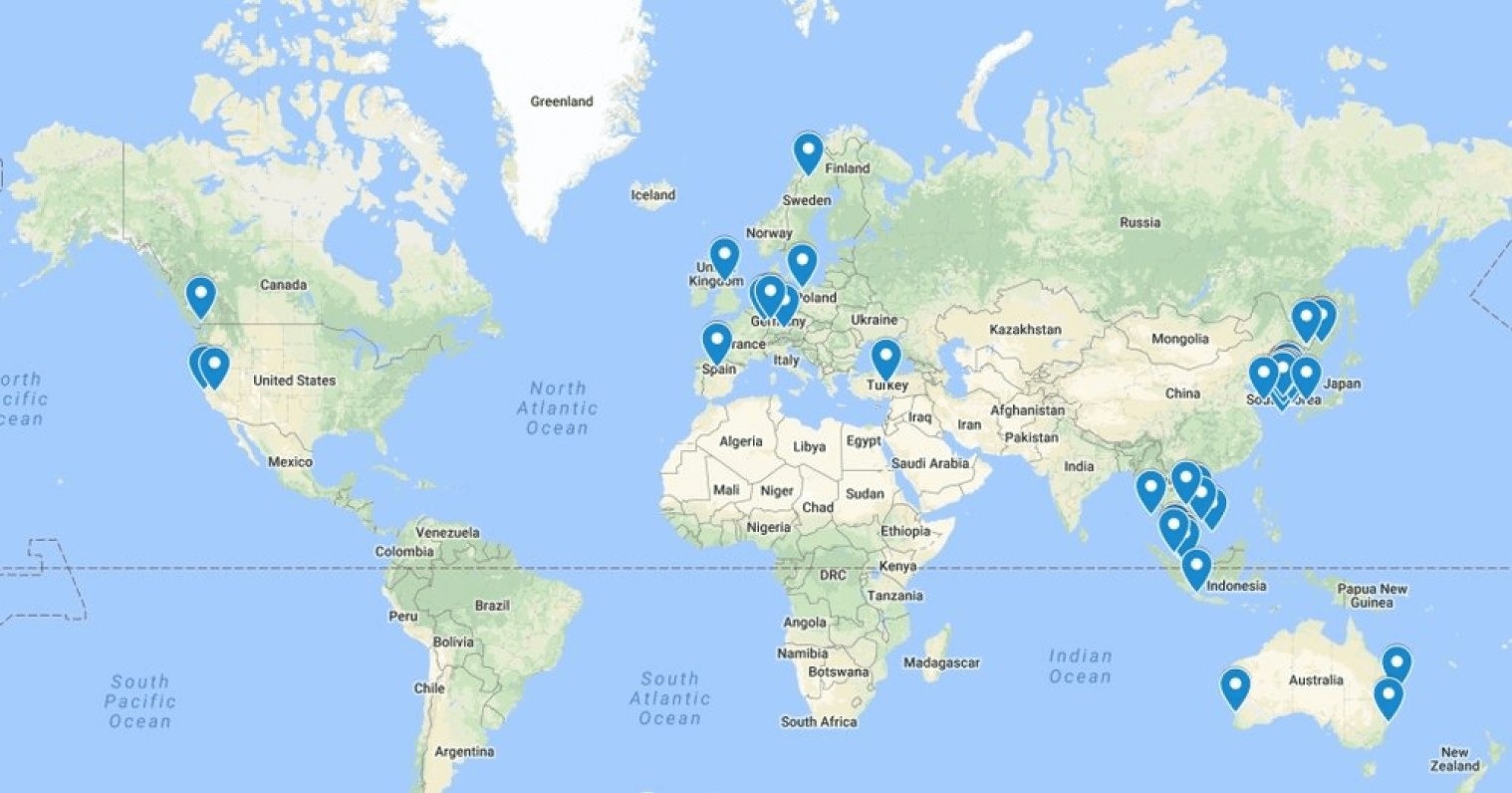
Additionally, we can serve as the main point of contact and anchor as you reach out internationally, as we work closely with our affiliated partners based in the US, Europe, China and other parts of the world.
With the most recent development of the Medical Device Regulation (MDR) in Europe, we are able to provide regulatory guidance to ensure smooth transition from the MDD.
The Global Influence of Stendard’s Services